
Somewhere Along the Way, I Stopped Looking
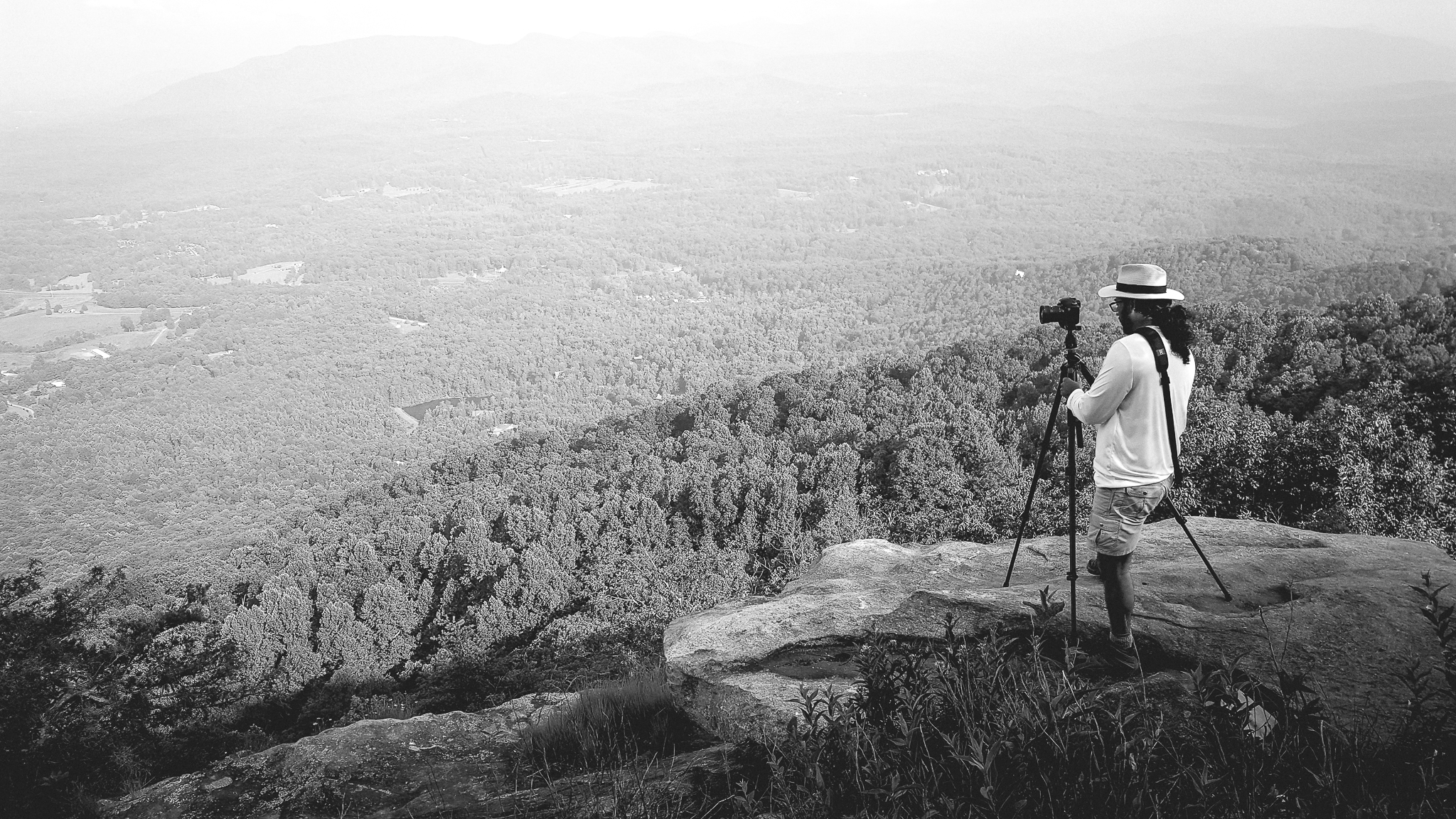
There comes a point in almost every profession when the work begins to change you. Not dramatically, and rarely all at once. It happens quietly, almost without permission. The thing you once did out of curiosity slowly becomes something measured by calendars, deadlines, expectations, and routine. You still enjoy it. You may even love it. But somewhere beneath the responsibilities, another part of the experience begins to fade.
For a long time, I assumed people called that losing passion. I’m not sure I believe that anymore.
I realized this during a senior portrait session.
One of the seniors I was photographing was a ballerina. As we worked together, our conversation drifted away from camera settings and poses and toward something much more interesting. At one point I found myself saying, “We photographers tell stories through light and composition. You tell stories through movement without saying a single word.”
The sentence left my mouth as naturally as breathing. What surprised me was what it stirred afterward.
I drove home thinking about those words for hours, not because they were particularly profound, but because they reminded me of someone I hadn’t spoken to in a very long time the younger version of myself who fell in love with photography before it became my profession.
That realization stayed with me because it exposed a question I hadn’t thought to ask.
Had I lost my passion?
The more I sat with it, the less convinced I became.
I don’t think I stopped loving photography.
I think I stopped looking.
Before photography became my career, the camera was never just a tool. It was an excuse to slow down. I photographed landscapes before sunrise, flowers still holding onto the morning dew, quiet city streets after the rain, reflections in puddles, abandoned buildings weathered by time, birds perched on distant branches, dragonflies hovering above still water, clouds slowly reshaping the sky, and the soft light spilling through a window onto an otherwise ordinary room. None of those photographs had deadlines attached to them. No one was waiting for a gallery. No client had requested them.
I photographed them simply because I wanted to understand them.
I remember waking long before dawn just to watch the first light reach a familiar place. Sometimes I would return to the exact same location over and over again, fascinated by how the light transformed everything around it. Morning told one story. Afternoon told another. Sunset rewrote it entirely. The landscape never changed, yet the photograph always did.
I carried my tripod everywhere. Setting it up became a ritual more than a task. I’d carefully compose the frame, adjust the camera, and then wait. Sometimes for several minutes. Sometimes much longer. Back then, waiting never felt unproductive. It was part of seeing.
Looking back now, I don’t think those mornings taught me how to make photographs.
They taught me how to notice.
Somewhere along the way, that quiet habit disappeared.
Not because photography stopped inspiring me, but because photography became work. Assignments replaced exploration. Timelines replaced wandering. Editing queues, client emails, travel schedules, invoices, contracts, and deadlines slowly filled the spaces that curiosity once occupied. The camera remained in my hands almost every day, yet I wasn’t carrying it for the same reason anymore.
The strange thing about routine is that it rarely announces itself. It settles in gently until one day you realize you’ve become exceptionally good at producing, but you’ve quietly stopped observing.
I don’t think this happens only to photographers.
A musician can spend so much time performing that they forget what it feels like to play for themselves. A chef may come home exhausted and lose the desire to cook. A writer can become so focused on meeting deadlines that they stop writing the stories they once couldn’t wait to tell.
The profession doesn’t necessarily destroy the passion.
It changes the relationship.
We begin by creating because we’re curious.
Eventually, we become so busy creating that we forget to remain curious.
Perhaps that’s why my conversation with the ballerina lingered in my mind. We weren’t really talking about photography or dance. We were talking about what artists do.
She tells stories through movement.
I tell stories through light and composition.
Neither of us needs words to make someone feel something.
For a few brief minutes, the responsibilities faded into the background. There were simply two artists talking about the different languages we use to express the same human desire: to notice something meaningful and share it with someone else.
That conversation reminded me of something I had forgotten.
Being an artist isn’t defined by the camera hanging around your neck, the lens you own, or the profession you’ve built.
An artist is someone who pays attention.
The camera has never been the source of that attention.
It has only ever been the excuse.
I don’t know if I’ll return to photographing landscapes the way I once did. I don’t know if I’ll find myself standing in the same field before sunrise, waiting for light to slowly reveal the world, or spending an afternoon watching birds move from branch to branch simply because I have nowhere else to be.
Maybe I will.
Maybe I won’t.
But I do know this.
Somewhere along the way, I stopped looking.
And perhaps finding that part of myself again has nothing to do with photography at all.
Perhaps it begins with something much simpler.
Slowing down long enough to notice what has been there all along.