
Why Two Photographers Change Everything
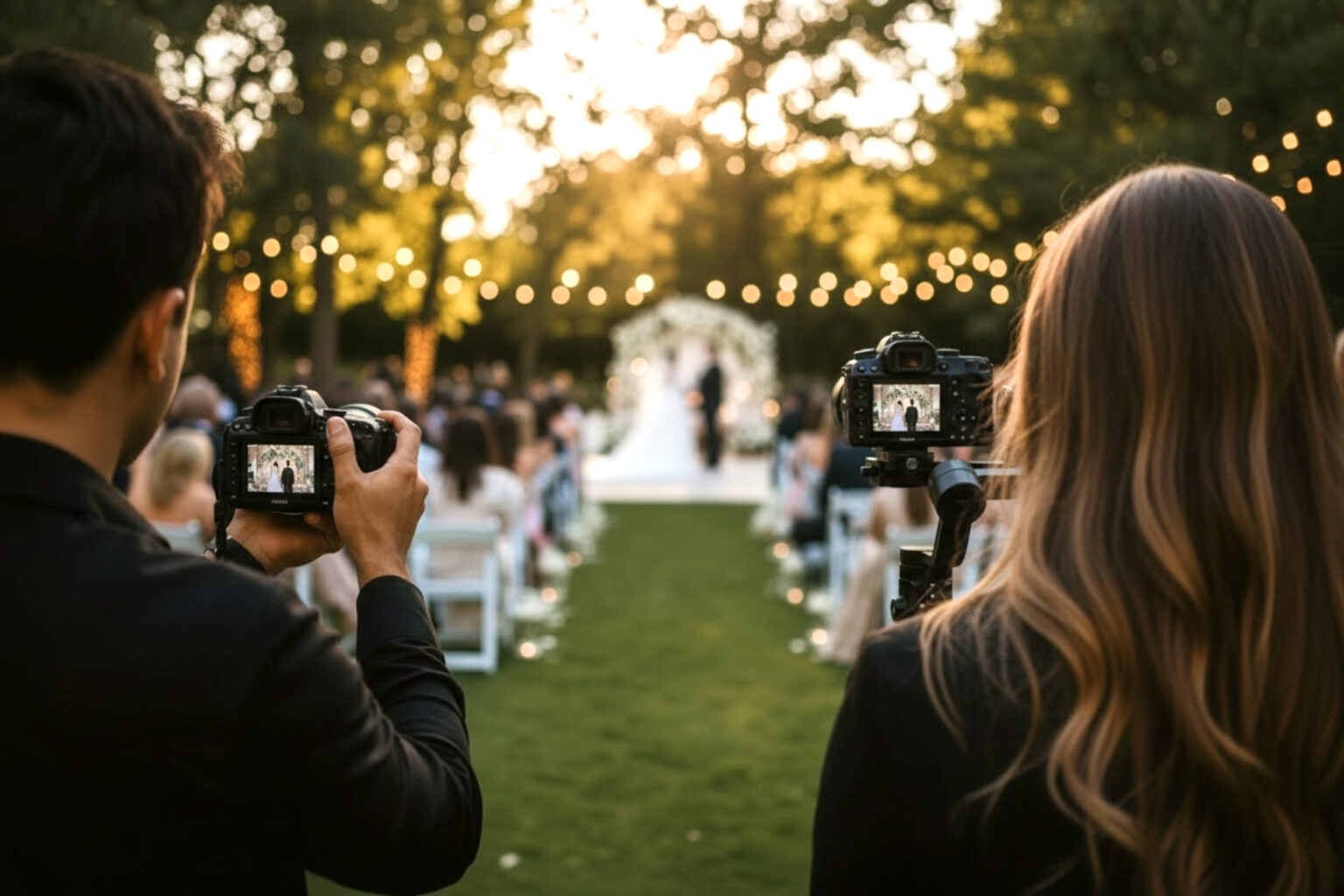
Most couples think about photography in terms of a single relationship: one photographer, one perspective, one version of the day being recorded. But a wedding rarely happens in one place at a time.
While the bride is finishing her makeup, the groom is somewhere else entirely, joking with his groomsmen or sitting quietly by himself for a few minutes before everything begins. During the ceremony, the couple faces forward while their parents, sitting just a few feet behind them, are reacting in ways no one facing the altar will ever see. A single photographer has to choose, again and again, where to point the camera and what to let go. Two photographers remove that choice. Nothing disappears simply because one person couldn’t be in two places.
Coverage Isn’t Just More Photos
It’s easy to assume that adding a second photographer just means more images from the day, a bigger gallery, extra angles of the same moments. That’s not really what changes. What changes is which moments exist at all.
Some parts of a wedding day are the clearest example of this. With one photographer, the timeline can usually be built so both the bride and groom get photographed getting ready moving between rooms, planning around it in advance. That part isn’t the issue. The issue is that weddings don’t always follow the timeline. When something unplanned happens with the bride at the same moment something’s happening with the groom, one photographer still has to choose where to be. Two photographers remove that choice entirely.”.
The same is true during the ceremony itself. A processional captured only from the front tells you what the couple looked like walking toward each other. It doesn’t show what their parents’ faces did in that same instant, or how a sibling in the front row reacted when they first saw the dress. Those reactions aren’t secondary. For a lot of families, they end up mattering just as much as the couple’s own expressions, sometimes more, once enough time has passed.
Two Photographers Also Change the Feeling of the Day
There’s a version of this that has nothing to do with coverage at all, and more to do with pace. A wedding day is long, and it asks a lot of the people being photographed. When one photographer is trying to document everything alone, there’s an unavoidable pressure to move quickly, to keep things efficient, to make sure nothing gets missed. Couples can feel that pressure even when no one says it out loud.
With two photographers working together, that pressure gets distributed. One can stay close to the couple during a quiet moment while the other handles something happening across the room. Family formals can move faster because two people are organizing them instead of one. A first look can be witnessed from both directions at once, without asking anyone to stand still and wait their turn to be photographed properly. The day doesn’t feel like it’s being managed around the camera. It feels like the camera is simply keeping up.
Style Doesn’t Disappear, It Gets Layered
A common concern is that adding a second photographer will somehow dilute the vision of the first, that two people photographing the same wedding will produce two different styles pulling against each other. In practice, that’s rarely how it works when photographers are used to shooting together. The second photographer isn’t there to create a competing body of work. They’re there to extend the same eye into a second location.
What that produces isn’t two separate stories. It’s one story told with more of its edges intact — the reaction shots, the in-between moments, the version of the day that happened just outside the frame of wherever the primary photographer happened to be standing.
What This Actually Means for You
None of this means a single photographer can’t do beautiful, thorough work. Plenty of wedding days are small enough, or simple enough in their layout, that one person covering everything works perfectly well. The question isn’t really about talent. It’s about geography and time, and whether your day has moments happening simultaneously in places a single photographer can’t be.
If your ceremony has family sitting close enough to react visibly. If getting ready happens in two separate spaces. If a first look, a family gathering, or a reception entrance matters to more people than just the two of you standing in front of the camera, a second photographer isn’t a luxury add-on. It’s the difference between a day documented from one point of view and a day documented as it actually happened, from more than one place at once.
Because years from now, it won’t just be your own reactions you’ll want to see again. It will be everyone else’s, too the ones that happened while you were looking the other way.