
AI in Wedding Photography: What It Does — and What It Doesn’t
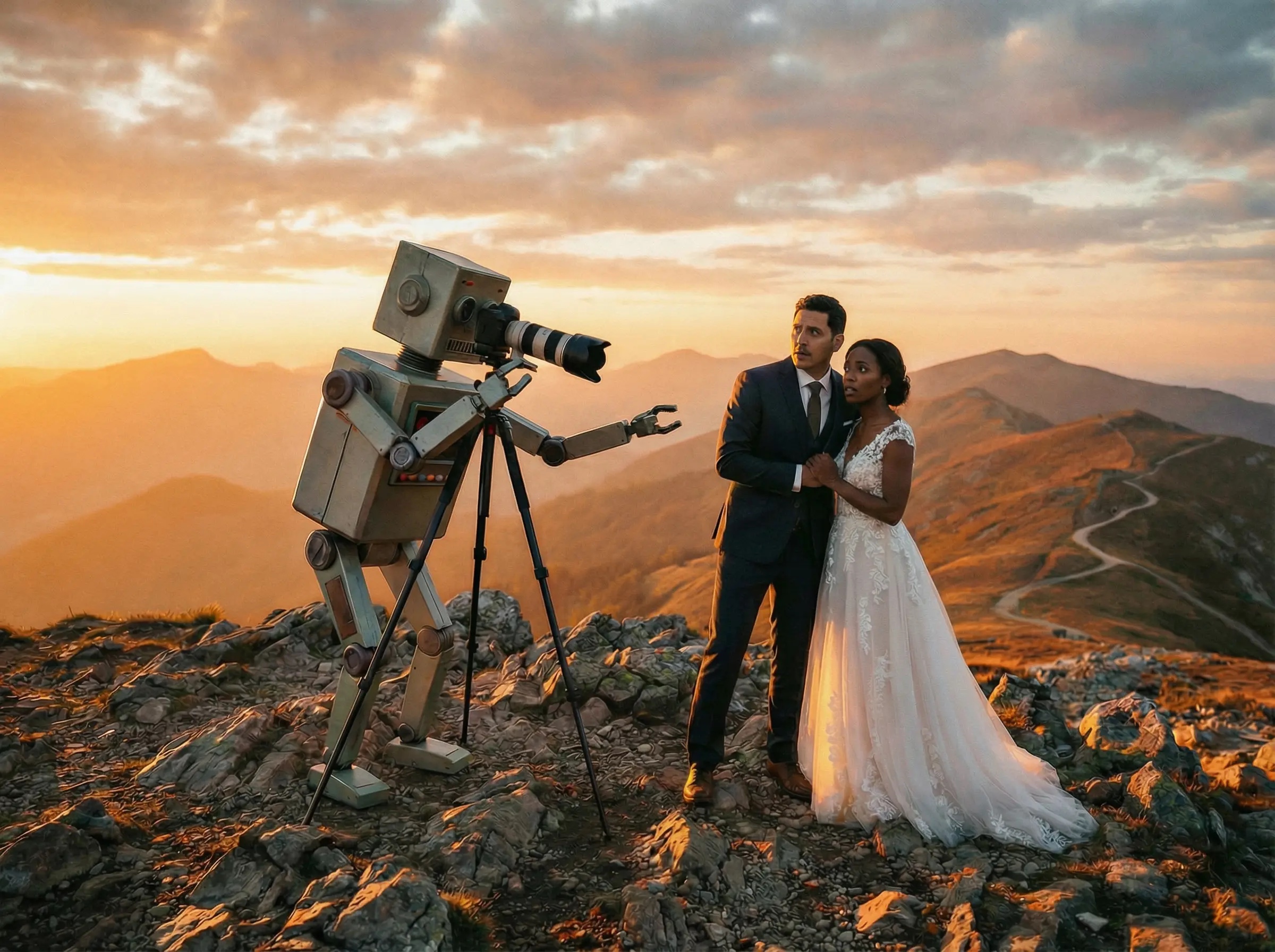
Couples have started asking a new question:
“Are your photos natural?”
“Do you use AI?”
It’s a fair question.
Artificial Intelligence is everywhere right now — in our phones, our emails, even the ads we see. So it makes sense to wonder whether it’s also creating your wedding photos.
Here’s the honest answer:
AI does not replace the art of photography.
It accelerates parts of the process.
And that distinction matters.
We’ve Been Using “Intelligent” Tools for Decades
Digital photography became widely available to consumers in the early 1990s and became mainstream in the early 2000s.
The moment photography transitioned from film to digital sensors, intelligent systems were built into cameras.
With film photography:
Focus was manual.
White balance depended on the type of film stock.
There was no instant preview.
Exposure adjustments were estimated.
Editing required physical darkroom manipulation.
With digital photography:
Autofocus systems assist with precision.
Cameras calculate exposure in real time.
White balance can be adjusted instantly.
Images can be reviewed immediately.
Editing happens through software instead of a darkroom.
Technology has been evolving for over 30 years.
We just didn’t call it AI back then.
Where AI Helps Before the Wedding
Before a wedding even begins, AI supports the business side of photography:
CRM systems that track inquiries and follow-ups
Automated scheduling confirmations
Secure payment processing
Contract reminders
Email workflows
Calendar conflict prevention
Lead organization
Gallery analytics
SEO and advertising optimization
This doesn’t replace human communication.
It allows me to respond faster, stay organized, and give couples a smoother experience from inquiry to delivery.
Efficiency behind the scenes means more energy for creativity on the wedding day.
What Happens After the Wedding
This is where most of the AI conversation lives: editing.
Programs like Lightroom and Photoshop now include advanced tools that allow photographers to:
Select hair, skin, eyes, or clothing individually
Reduce noise in low-light images
Remove distracting objects
Balance exposure across hundreds of photos
Match colors consistently
Sync edits across galleries
Deliver files faster through cloud systems
Could we do these things before?
Yes.
Was it time-consuming?
Extremely.
What once took 20 minutes per image can now take seconds.
But here’s the important part:
I do not let AI decide how your wedding should look.
It speeds up mechanical adjustments.
It does not replace artistic judgment.
Every final image is still reviewed, adjusted, and refined intentionally.
During the Wedding — Nothing Changes
On a wedding day, there is no automation.
There are real people.
Real emotions.
Real interactions that happen once and never again.
Modern mirrorless cameras now include features like:
Real-time eye detection
Subject tracking
Low-light autofocus
Silent shooting
In-body stabilization
Real-time exposure preview
Eye detection alone has been a game changer.
Before mirrorless systems, we had to focus and recompose. If the subject moved, we adjusted again.
Now the camera can track the eye in real time — even if someone turns slightly or shifts position.
What does that mean for you?
Higher focus accuracy
More usable images
More creative flexibility
Greater confidence while shooting
Technology allows me to focus less on mechanics and more on emotion.
But it doesn’t create the emotion.
What Has Not Changed
The tools have evolved.
The responsibility hasn’t.
Photography is still about:
Observing moments before they unfold
Directing gently when needed
Anticipating emotion
Creating a comfortable environment
Telling a story through light
Painters once used brushes.
Film photographers used darkrooms.
Today we use sensors and software.
The medium evolves.
The artistry remains human.
Artificial Intelligence accelerates.
Human Intelligence shapes the story.
So… Are Your Photos Natural?
Yes.
Not because we avoid modern tools.
But because we use them responsibly.
Your wedding photos are not generated.
They are captured.
Directed.
Edited intentionally.
Delivered thoughtfully.
If you’re looking for a photography experience that blends modern efficiency with human connection, I’d love to hear from you.
Send a message — I’d love to hear from you.