
Why Wedding Videography Feels Different From Photography
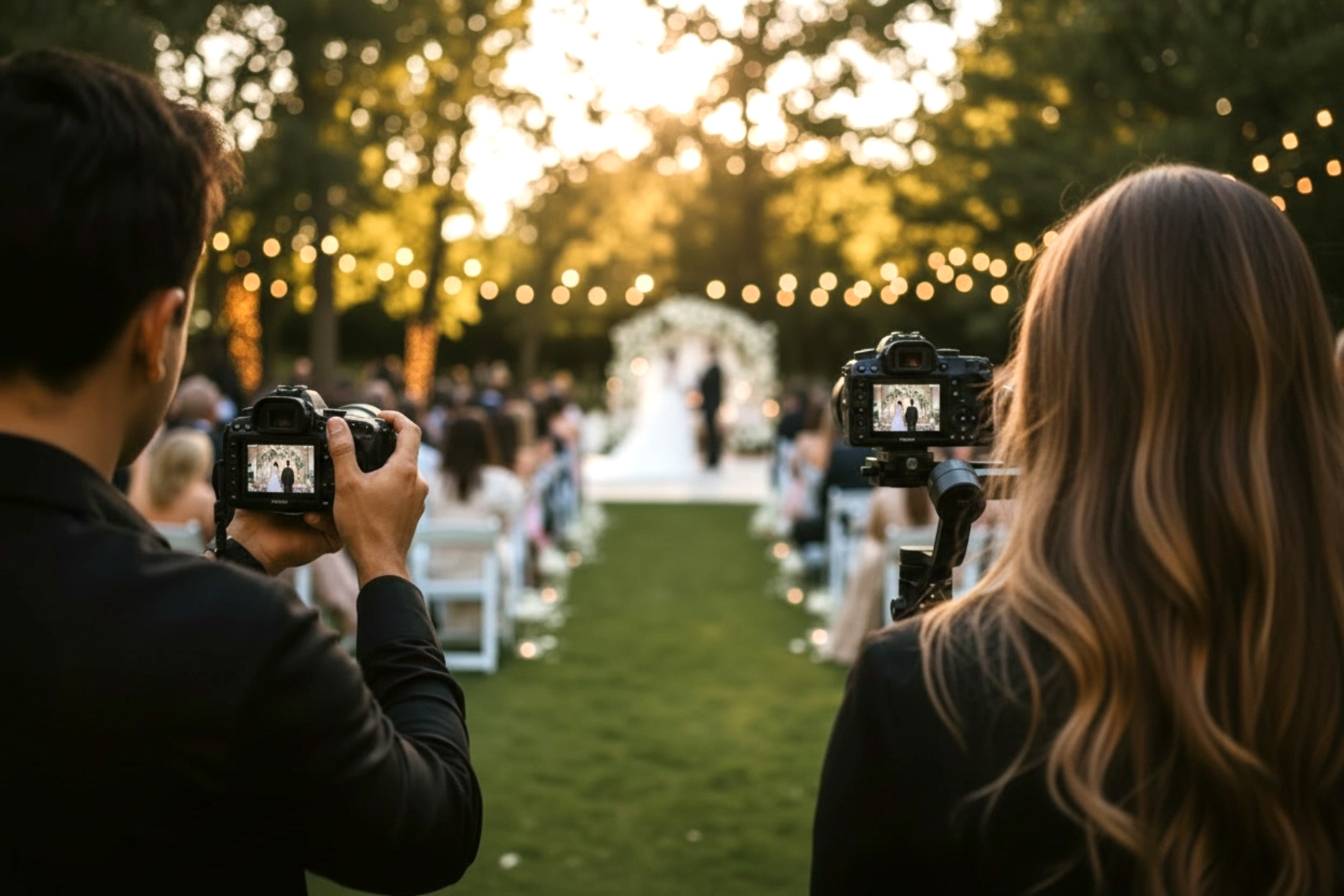
Most couples understand photography immediately because photographs already exist as part of everyday life long before a wedding ever happens. People grow up surrounded by framed images inside homes, albums stored on shelves, photographs shared between generations, and portraits that slowly become part of a family’s identity over time. Photography feels familiar because it has always existed as the visible language of memory.
Videography tends to feel different.
Not because it matters more than photography, and not because one medium replaces the other, but because videography preserves something photographs cannot fully hold onto. Photography freezes a moment into permanence. Videography preserves the atmosphere surrounding it. One isolates emotion into a still frame. The other preserves the movement, sound, pacing, and rhythm of a memory unfolding in real time.
What photography and videography preserve can feel very different as time moves forward
Photography Preserves Stillness
A single frame has the ability to simplify emotion in a way almost nothing else can.
Part of what makes wedding photography so emotionally powerful is its ability to remove everything unnecessary from a moment. A photograph can preserve a glance during the ceremony, the expression on a parent’s face during speeches, or the quiet stillness before the reception begins, and transform it into something permanent. The image no longer moves. It no longer disappears. It simply remains.
That permanence is what allows photographs to slowly become part of everyday life. Wedding images eventually stop feeling like documentation and begin feeling like history. They live inside albums, on walls, across hallways, inside frames on nightstands, and eventually inside the visual memory of an entire family. Years later, people rarely think about the technical side of the image itself. They think about who was there, what life looked like during that season, and how certain moments felt before time quietly changed them.
Photography also asks the viewer to participate in memory differently. A still image leaves space for imagination. You can see someone laughing without hearing the sound of it. You can see a dance floor filled with movement while the room itself remains silent. The photograph preserves the emotional weight of the moment while allowing the mind to reconstruct the atmosphere surrounding it.
That tension between stillness and imagination is part of what gives photography its timeless quality.
Videography Preserves Atmosphere
Motion and sound change the way memory is experienced.
What makes wedding videography emotionally powerful is rarely the cinematic editing or dramatic visuals people often associate with wedding films. More often, it is the preservation of atmosphere itself. The nervous pacing before the ceremony begins. The slight trembling in someone’s voice during vows. The sound of parents laughing during speeches. The movement of a dress during the first dance. The natural rhythm of people interacting together inside one space at one specific moment in time.
Those things are difficult to preserve through photography alone because they exist between the frames.
Videography captures the parts of memory that are constantly moving. It preserves cadence, timing, sound, energy, and motion in a way that feels much closer to lived experience. And over time, those details often become unexpectedly emotional because life itself continues changing around them. Voices mature. Parents age. Friend groups evolve. Children eventually watch footage from a wedding that happened before they even existed.
That is often when wedding films begin to feel different.
Not bigger. Not more important. Just different in the way they allow people to revisit memory itself.
Sometimes the clips that become most meaningful years later are not the cinematic centerpiece moments at all. They are the quieter fragments of ordinary interaction that nobody realized would someday matter so much. A grandparent speaking casually during cocktail hour. Friends laughing in the background before dinner begins. The sound of a room filled with people who were all together at one point in life.
Videography preserves the emotional texture surrounding the memory, not just the visual evidence that it happened .
Why Videography Often Feels Different With Time
Photography is easier to imagine during planning because photographs already shape how people remember their lives.
Wedding planning naturally tends to focus heavily on visual imagery. That makes complete sense. People interact with photographs constantly through albums, galleries, phones, framed prints, and social media. Photography already exists inside the structure of everyday memory, so its value feels immediate and familiar.
Videography often feels more abstract during the planning process because its emotional value tends to reveal itself differently over time.
Years later, people are not only revisiting how the wedding looked. They are revisiting how people sounded, moved, laughed, danced, spoke, and existed together during one season of life that can never be recreated in exactly the same way again. The emotional impact of hearing a parent’s voice or seeing movement preserved naturally becomes heavier with time because life itself continues moving forward.
That is why wedding videography often becomes more meaningful gradually instead of instantly.
Photography becomes the visual legacy of the wedding day.
Videography becomes the closest thing to stepping back inside it.
The Best Wedding Memories Usually Preserve Both
Not because one medium completes the other, but because they preserve memory differently.
Photography and videography are often discussed as if they are competing versions of the same thing, when in reality they serve completely different emotional purposes over the course of a lifetime. Photography preserves stillness with extraordinary clarity. Videography preserves movement, sound, atmosphere, and emotional rhythm.
One allows a moment to stand still forever. The other allows people to return to the feeling of it.
And years from now, that distinction may carry far more emotional weight than it first appears to.